Showing posts with label wrens. Show all posts

03 February, 2014

Canyon Wren

Scientific Name: Catherpes mexicanus

Range / Habitat: Year-round in arid canyonlands of western North America and Mexico.

Field Notes: Medium-sized wren with rufous back, tail and belly but white throat. Long decurved bill and no eyestripe. Song a series of cascading notes.

Personal Notes: We had been searching for this bird a long time before finding him in Joshua Tree National Park.

30 December, 2013

Cactus Wren

Scientific Name: Campylorhynchus brunneicapillus

Population Estimate: Unknown, but Least Concern status

Range / Habitat: Year-round in desert southwest US and northern Mexico. Requires the presence of spiny cacti.

Field Notes: Large wren with light breast, spotted dark. Long white eye stripe. Brown, barred back and tail.

Personal Notes: A conspicuous resident at the Sonora Desert Museum in Tucson AZ. Later we enjoyed these birds on our hotel grounds in San Jose del Cabo.


23 May, 2011

Plain Wren


Scientific Name: Cantorchilus modestus

Population Estimate: 500K - 5M

Range / Habitat: Lowland and foothill dry and moist forests, including forest edges, in southern Mexico and Central America.

Field Notes: Drab wren with only minimal banding on tail, white superciliary, black eye stripe and all white throat, chest, belly and flanks. Further distinguished by simple, piercing call.

Personal Notes: Seen at Monteverde Lodge, Costa Rica

Rufous-naped Wren

Scientific Name: Campylorhynchus rufinucha


Population Estimate: 50-500K


Range / Habitat: Lowland dry shrub land of southern Mexico and Central America


Field Notes: Large wren with distinctive black and white striped head, red eye, rufous nape and back, barring on wings and tail.


Personal Notes: En route Monteverde to Carara, Costa Rica

12 May, 2011

Carolina Wren

Scientific Name: Thryothorus ludovicianus

Population Estimate: 17M

Range / Habitat: Found in a wide range of habitats, from swamps to forest to residential areas. Requires moderately dense shrub or brushy cover. Year-round in southeastern US and Yucatan Peninsula.

Field Notes: Small passerine with typical wren characteristics -- tail held upward, long and slightly decurved bill. Marked eyestripe. This wren has a characteristic call.

Personal Notes: Seen on nest at Disney's Animal Kingdom. Later a common bird in Julie and Jason's backyard in Evansville, Indiana. Also taunted us throughout the woods of the Lowcountry. 

07 May, 2011

Pacific Wren

Scientific Name: Troglodytes hiemalis

Population Estimate: Unknown, but Least Concern status

Range / Habitat: Found in moist forests year-round on the northern Pacific coast of North America. Summers throughout Canada, winters in the southern US.

Field Notes: Small, dark wren with short tail (usually cocked) and light eye stripe. Energetic and complicated song.

Personal Notes: Seen at East Sooke Regional Park on Vancouver Island. Some sources consider this to be a subspecies of Troglodytes troglodytes, found throughout much of the world.

20 December, 2010

Band-backed Wren

Scientific Name: Campylorhynchus zonatus

Population Estimate: 500K to 5M

Range / Habitat: Year-round in lowland and higher-altitude moist forest from eastern Mexico to northern Ecuador.

Field Notes: Large wren, found high in trees. Loud, raucous call. Can be quite aggressive with one another. Distinctive in range with boldly streaked back, white supercilium, white chest with black spots, rufous belly.

Personal Notes: Seen (and heard!) most mornings at Chaa Creek Resort.

14 May, 2010

Marsh Wren


Scientific Name: Cistothorus Palustris

Population Estimate: 8M

Range / Habitat: Year-round in portions of the American West. Otherwise, summers in the northeast and midwestern US and into Canada. Winters in Florida, the Gulf coast, southwestern US and into Mexico. Favors marsh...clearly.

Field Notes: Common and noisy resident of cattail marshes. Typical wren appearance of a small, secretive bird with tail held upright and slightly down-curved bill. Noticeable on this wren is the white eyebrow, buffy throat.

Personal Notes: The wrens fall for the iBird call every time....

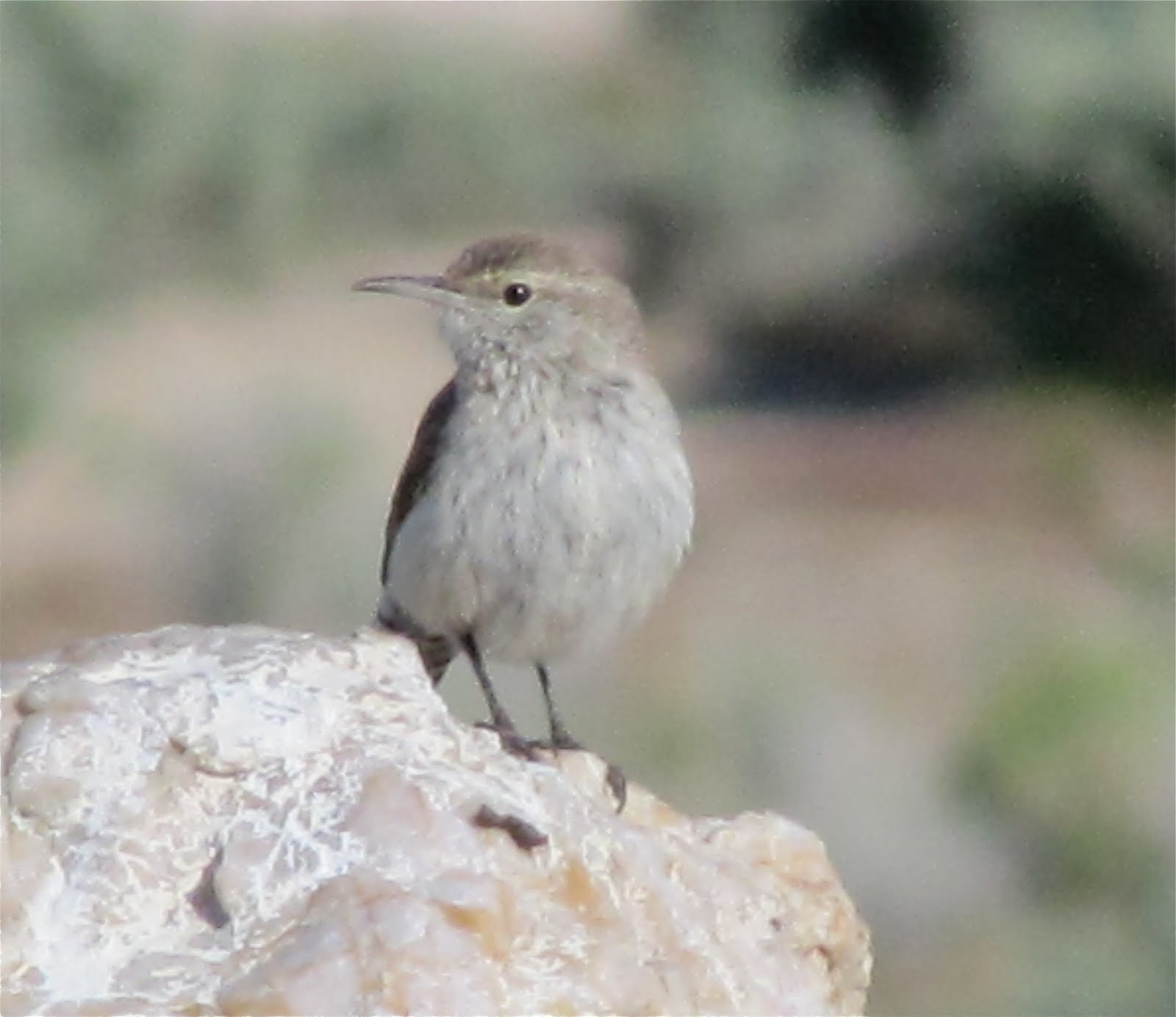
American Rock Wren


Scientific Name: Salpinctes obsoletus

Population Estimate: 4.2M, Least Concern status

Range / Habitat: Year-round in the southwestern US and into Mexico in rocky areas. Extends in summer further up in the western US. Their breeding habitat is dry rocky locations from southwestern Canada down to Costa Rica. 

Field Notes: Pale grey bird of rocky areas with typical wren appearance: tail often upright, slightly down-curved bill, pale white eyebrow. Streaking to throat, which is less pronounced in juveniles. 

Personal Notes: Did I mention that iBird audio can get a wren's attention? Even when not trying to…. 

02 May, 2010

House Wren


Scientific Name: Troglodytes aedon

Population Estimate: 10M, Least Concern status

Range / Habitat: Summer resident of much of the continental United States and some of Canada, winter resident of Mexico and the southern US coasts. There is also a year-round population in Central and South America. Preferred habitat is open shrubland, usually around human habitats.

Field Notes: Small brown songbird with long thin bill and relatively long tail. Buffy breast but the rest of the bird is brown with some barring on the wings more so on the tail. Distinctive features of this particular wren include lack of distinct eyebrow and bill that is yellow at the base but dark at the tip.

Personal Notes: Always a welcome sight, or sound.