Showing posts with label Italy. Show all posts

23 March, 2013

Common Wood Pigeon

Scientific Name: Columba palumbus

Population Estimate: 27M - 51M

Range / Habitat: Wooded areas in southern and western Europe, extending to eastern Europe and western Asia in summer.

Field Notes: Large pigeon, generally grey-purple, with conspicuous white neck spots, white eye-ring, and white shoulders in flight.

Personal Notes: A common sight around Alhambra in Granada, Spain and then again at Kew Gardens in London.


16 March, 2013

Common Chiffchaff

Scientific Name: Phylloscopus collybita

Population Estimate: Unknown, but Least Concern status

Range / Habitat: Migratory bird which breeds in open woodlands throughout northern and temperate Europe and Asia. Winters in southern and western Europe, southern Asia and north Africa.

Field Notes: Small, nondescript warbler. Olive-grey above, buff below, faint eyestripe. Named for its chiff-chaff song.

Personal Notes: A common little bird, but tough to photograph.

27 October, 2012

Hooded Crow

Scientific Name: Corvus Cornix

Population Estimate:
Unknown, but Least Concern status

Range / Habitat:
In Britain, this crow mainly occurs in north and western Scotland, it also occurs in Ireland and on the Isle of Man. Elsewhere it is widespread throughout central and northern Europe between the Arctic in the north to the Mediterranean in the south.

Field Notes:
The Hooded Crow (Corvus cornix) (sometimes called Hoodiecrow) is a Eurasian bird species in the crow genus. It is an ashy grey bird with black head, throat, wings, tail and thigh feathers, as well as a black bill, eyes and feet. Like other corvids it is an omnivorous and opportunistic forager and feeder.

Personal Notes:
Some authors consider this bird conspecific with Carrion Crow.

18 October, 2012

Western Jackdaw

Scientific Name: Coloeus Monedula

Population Estimate: 21.1 - 90B

Range / Habitat: Widely distributed throughout Britain, but scarcer in upland areas. The jackdaw is also widespread throughout western Europe. Scandinavian populations migrate to England, Scotland and the Low Countries for the winter.

Field Notes: Medium-sized crow with grey nape and pale yellow eye. Hooded Crow with black eye, all black hood and more grey on back.

Personal Notes: Richard captured the top photo on the Cechy Most across the Vltava River in Prague.

Eurasian Magpie

Scientific Name: Pica Pica

Population Estimate: 22.5 - 57B (including Black-Billed Magpie in the US)

Range / Habitat: Resident in open areas, including artificial habitats, throughout most of Europe, Asia, and northwest Africa.

Field Notes: Large, conspicuous pied corvid with brilliant sheen to the back and long tail. Unmistakable in range.

Personal Notes: 


19 December, 2010

Ruddy Turnstone

Scientific Name: Arenaria interpres

Population Estimate: 460K to 800K

Range / Habitat: Circumpolar breeder in the Arctic tundra. Otherwise can be found on shorelines throughout the world, including New Zealand and Pacific islands.

Field Notes: Stocky shorebird with short, black bill, slightly upturned and bright orange legs. A harlequin-like pattern of black and white is characteristic in all plumages. The breeding plumage is even more dramatic with bright, rufous sides. Behaviorally, often seen turning over stones and shells.

Personal Notes: Though quite common throughout the world, always a lovely sight on our travels. 

23 March, 2010

Greater White-fronted Goose


Scientific Name: Anser Albifrons

Population Estimate:  2.6M to 3.1M

Range / Habitat: The nominate subspecies A. a. albifrons breeds in the far north of Europe and Asia, and winters further south and west in Europe. Two other restricted-range races occur in northern North America: A. a. gambeli in interior northwest Canada, and wintering on the coast of the Gulf of Mexico, slightly larger than the nominate form, and Tule Goose, A. a. elgasi, in southwest Alaska, largest and longest-billed of all, wintering in California.

Field Notes: The Greater White-fronted Goose (Anser albifrons) is a species of goose. The Greater White-fronted Goose is more closely related to the smaller Lesser White-fronted Goose (A. erythropus).It is named for the patch of white feathers bordering the base of its bill.They are smaller than Greylag Geese. As well as being larger than the Lesser White-fronted Goose, the Greater White-fronted Goose lacks the yellow eye-ring of that species, and the white facial blaze does not extend upwards so far as in Lesser.The male is typical larger in size, both sexes are similar in appearance – greyish brown birds with light grey breasts dappled with dark brown to black blotches and bars. Both males and females also have a pinkish bill and orange legs and feet.

Personal Notes:

14 February, 2010

Western Cattle Egret


Scientific Name: Bubulcus ibis

Population Estimate: 3.8M to 7.6M

Range / Habitat: Found throughout most of the US, Mexico, Central America, and South America. Preferred habitat is in fields, near cattle. Rarely seen near the water.

Field Notes: Stocky white heron with sturdy yellow bill and dark legs. Readily distinguished from other white herons by habitat. Great Egret much larger with elongated neck. Snowy Egret slimmer with black bill and yellow feet.

Personal Notes:

14 November, 2009

Eurasian Chaffinch


Scientific Name: Fringilla coelebs

Population Estimate: 500M - 1.5B

Range / Habitat: This bird is widespread and very familiar throughout Europe. It is the most common finch in western Europe, Its range extends into western Asia, northwestern Africa, and Macaronesia, where it has many distinctive island forms.

Field Notes: The Common Chaffinch's large double white wing bars, white tail edges and greenish rump easily identify this 14–16 cm long species. The breeding male is unmistakable, with his reddish underparts and a blue-grey cap. The female is drabber and greener, but still obvious.

Personal Notes:

Eurasian Jay

Scientific Name: Garrulus glandarius

Population Estimate: 40M - 150M

Range / Habitat: Resident in temperate forest throughout most of Europe, northwest Africa to the Indian Subcontinent and further to the eastern seaboard of Asia and down into south-east Asia.

Field Notes: Large, mostly brown passerine with iridescent blue flash in wings and dark tail.

Personal Notes: Seen at Kew Royal Botanical Gardens in London.

Common Stonechat


Scientific Name: Saxicola torquatus

Population Estimate: 25M - 300M

Range / Habitat: The Common Stonechat is very widespread, occurring all across the Northern Hemisphere from North America, Europe, Asia, as well as throughout the African continent.

Field Notes: The Common Stonechat is a small chunky bird. The male has a black head, an orange breast, a pale belly, a dark tail and a brown back with black streaks. The female is paler and more chestnut in color, with a ginger breast and a pale throat. The juvenile is brown overall with a mottled chest and a pale throat

Personal Notes:

Great Spotted Woodpecker


Scientific Name: Dendrocopos major

Population Estimate: 75M - 200M

Range / Habitat:In Ireland, this woodpecker has been recorded in Tollymore Forest Park. While the Irish Wildlife Trust had argued in the past for the reintroduction of this woodpecker, the birds themselves began to recolonize Ireland of their own accord since about 2007

Field Notes: The upperparts are glossy black, with white on the sides of the face and neck. A black line zigzags from the shoulder halfway across the breast (in some subspecies nearly meeting in the center), then back to the nape; a black stripe, extending from the bill, runs below the eye to meet this latter part of the zigzag line. On the shoulder is a large white patch and the flight feathers are barred with black and white. The three outer tail feathers are barred; these show when the short stiff tail is outspread, acting as a support in climbing. The underparts are dull white, the abdomen and undertail coverts crimson. The bill is slate black and the legs greenish grey.

Personal Notes:

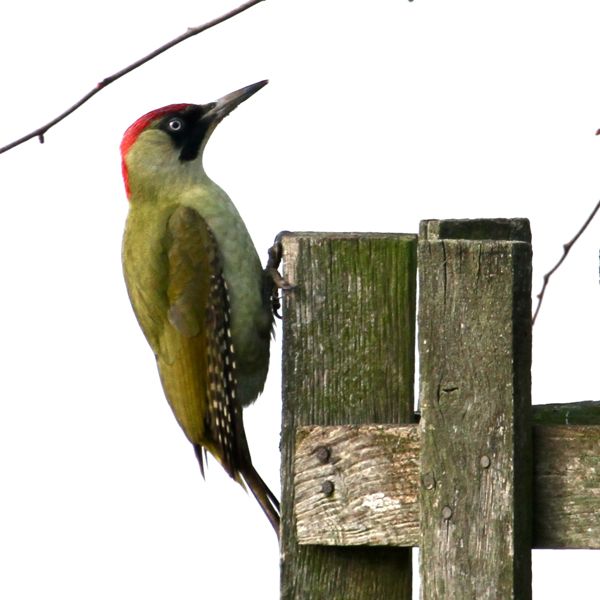
Eurasian Green Woodpecker


Scientific Name: Picus viridis

Population Estimate: 2M - 5M

Range / Habitat: Eurasian Green Woodpecker is essentially resident in its range, from W Europe and North Africa, to W Asia.

Field Notes: Adult male has green plumage. Upperparts are bright yellow-green. Rump is bright yellow. Uppertail coverts are yellow with green bases. Uppertail feathers are blackish with green edges. Central pair shows some pale bars. Long, pointed bill is dark grey to blackish, with paler base of lower mandible. Eyes are white with pinkish-white eye-ring. Short legs and zygodactylous feet are greenish-grey.

Personal Notes:

Common Kingfisher


Scientific Name: Alcedo atthis

Population Estimate: 600K

Range / Habitat: The Common Kingfisher is widely distributed over Europe, Asia, and North Africa.

Field Notes:This species has the typical short-tailed, dumpy-bodied large-headed and long-billed kingfisher shape.Their brilliant blue upperparts, deep red underparts, white face patches and unique shape make Kingfishers impossible to misidentify.


Personal Notes:

Yellow-legged Gull


Scientific Name: Larus michahellis

Population Estimate: 760K - 1.8M

Range / Habitat: The breeding range is centred around the Mediterranean Sea. In North Africa it is common in Morocco, Algeria and Tunisia and increasing in places

Field Notes: Adults have darker grey backs and wings than herring gulls, but are paler than lesser black-backed gulls. They have more black in the wing tips than herring gulls and smaller white 'mirrors'. The legs are bright yellow, there is a red ring around the eye and the bill is yellow with a large red spot. In non-breeding plumage, the head is less streaked and whiter than herring gulls.

Personal Notes: We got other shots of this gull in Spain, but still like the top photo best -- sulking through the rain on the Plaza San Marco in Venice. 

13 November, 2009

Mediterranean Gull


Scientific Name: Larus melanocephalus

Population Estimate: 360K - 960K

Range / Habitat: The Meditteranean Gull breeds almost entirely in Europe, mainly on the Black Sea coast of Ukraine, with a recent spread to the northern Caucasian Plains and Azerbaijan.

Field Notes: The Mediterranean Gull is slightly larger and bulkier than the Black-headed Gull with a heavier bill and longer, darker legs. The breeding plumage adult is a distinctive white gull, with a very pale grey mantle and wings with white primary feathers, with a black hood contrasting with distinct white eye crescents. The blunt tipped, parallel sided, dark red bill has a black subterminal band.

Personal Notes:

Common Black-headed Gull

Scientific Name: Larus ridibundus

Population Estimate: 4.8M - 8.9M, Least Concern status

Range / Habitat: Breeds on inland wetlands and marine habitats of Europe and Asia, and also in coastal eastern Canada. Most of the population is migratory, wintering further south in costal areas.

Field Notes: Delicate hooded gull with black-tipped red bill and red legs. Light grey mantle and black-tipped primaries. In summer plumage, head is chocolate brown. In winter plumage, head is all white except for black spot behind the eyes. Distinguished from Mediterranean Gull by black in wings.

Personal Notes: We finally saw this gull in bleeding plumage in Spain after winter sightings in Venice and Prague. Seen again in breeding plumage in Iceland.

Common Sandpiper

Scientific Name: Actitis hypoleucos

Population Estimate: 2.6M - 3.2M

Range: Throughout Africa, Europe, Asia and Australia.

Field Notes: Medium-sized shore bird with proportionate bill. Drab back but bright white breast and striking eye-ring. White wedge between neck and wing. Non-breeding Spotted Sandpiper is similar but does not generally overlap in range.

Personal Notes:

Common Greenshank


 File:Common Greenshank (Tringa nebularia) at Bharatpur I IMG 5523.jpg

Scientific Name: Tringa nebularia

Population Estimate: 440K - 1.5M


Range / Habitat: Migratory species, breeding from northern Scotland eastwards across northern Europe and Asia. Winters in Africa, the Indian Subcontinent, and Australasia, usually on fresh water.

Field Notes: Medium-sized wader with brown-grey upperparts and buff underneath. They have long greenish legs and a long, slightly upturned bill with a grey base.

Personal Notes: Seen at Donana National Park, Spain.

Common Snipe

Scientific Name: Gallinago gallinago

Population Estimate: 6.3M - 8.1M

Range / Habitat: The common snipe breeds from Alaska to Newfoundland south to the mid-United States. It is also found in Europe, Northern Africa and Asia.

Field Notes: The common snipe is a meduim-sized wading bird with a long, straight, pointed, black bill. It has a brown body with black bars, a striped head and back and a white belly. The common snipe's legs are shorter than most wading birds' legs.
 

Personal Notes: It was amazing to hear these birds drumming on their breeding grounds in northern Iceland.