
Showing posts with label California. Show all posts
Showing posts with label California. Show all posts
17 August, 2015


03 February, 2014
Canyon Wren


Range / Habitat: Year-round in arid canyonlands of western North America and Mexico.
Field Notes: Medium-sized wren with rufous back, tail and belly but white throat. Long decurved bill and no eyestripe. Song a series of cascading notes.
Personal Notes: We had been searching for this bird a long time before finding him in Joshua Tree National Park.
Ladder-backed Woodpecker

Range / Habitat: Year-round in arid, desert areas of southwestern US and northern Mexico where it forages and nests in cacti.
Field Notes: Small black and white woodpecker with barring complete across its back and spotting on chest. Males with red crown. Downy Woodpecker with smaller bill length relative to head, white stripe down back and clear underparts.
Personal Notes: Seen in Joshua Tree National Park.
Orange-crowned Warbler

Population Estimate: Least Concern status
Range / Habitat: Found in shrubs and low vegetation. Breeds in Canada, Alaska and the western US. Winters in the southern US and Mexico.
Field Notes: Dusky olive-yellow warbler with yellow under tail. Breeding male has orange crown, but this is by no means a commonly seen field-marking. Faint eyestripe and tendency to stay put can give the impression of a vireo, but easily distinguished by song
Personal Notes: Richard took this amazing photo at the Salton Sea during a January 2014 trip, and we have also seen and heard them in Migration in Minnesota (May).
Least Sandpiper


Population Estimate: Unknown, but Least Concern status
Range / Habitat: Breed in wet tundra and interrupted boreal forest across much of northern Canada and Alaska. In winter found along muddy shores and estuaries of the southern US, Mexico, and northern South America. They are not common on ocean beaches.
Field Notes: Smallest of the "peeps," not much bigger than a sparrow. They have a brown back and head with white eyestripe. White underneath with subtle neck striping. Black bill droops slightly. Distinctive yellow-green legs and a high-pitched "creep" call. Semipalmated Sandpipers and Western Sandpipers are slightly larger with stouter bills and black legs instead of the Least Sandpiper’s yellowish legs.
Personal Notes: A common sight, but hard to photograph, on the Salton Sea in California. Shown above with a Dunlin in the middle of the photo.
Black Phoebe

Population Estimate: Unknown, but Least Concern status
Range / Habitat: Year-round near water sources in coastal California, Mexico, Central America and into South America.
Field Notes: Sooty black flycatchers with white belly. Eastern Phoebe only overlaps in range in winter in Mexico, but has pale neck and chest.
Personal Notes: Richard first spotted this bird from the car near Palm Springs. We were later rewarded with photos at Salton Sea.
01 February, 2014
California Thrasher

Population Estimate: Unknown, but Least Concern status
Range / Habitat: Year- round in chaparral of California and Baja California.
Field Notes: Large, long-tailed songbird. Overall brown with faint white eyebrow and "whiskers". Long, decurved bill. Crissal Thrasher has little overlap, darker and grayer all over, has a black mustache stripe, light eyes, and reddish under the tail. Le Conte's Thrasher is paler sandy gray, with the pale belly contrasting with the wash of rusty under the tail. Curve-billed Thrasher also with little overlapping range, but has spotting on the chest and orange eyes.
Personal Notes: Our last spot at dusk in Big Morongo Preserve outside Joshua Tree National Park.
Scott's Oriole

Population Estimate: Unknown, but Least Concern status
Range / Habitat: Found in arid and semi-arid foothills and canyons with open woodland. Summers up to southwestern US, year-round in central Mexico and Baja.
Field Notes: Medium-sized songbird, male brilliant yellow and black, unmistakable in range. Female with light grey head and back, overall duller.
Personal Notes: Chance finding on our first drive-through of Joshua Tree National Park.
Lesser Goldfinch

Population Estimate: Unknown, but Least Concern status.
Range / Habitat: Year-round in scrubby oak, cottonwood, and willow habitats of the western US and Mexico.
Field Notes: Males bright yellow underneath with a glossy black cap and back Wings black with white patches. Tail black with large white corners. Females and immature males overall olive-yellow, wings darker with two whitish wing bars. American Goldfinch breeding male brighter yellow both above and below, black cap not complete. Non-breeding adult American Goldfinch more grey, more boldly patterned black and white wings, and pink bills.
Personal Notes: Seen at Barker Dam in Joshua Tree National Park.
Black-tailed Gnatcatcher

Scientific Name: Polioptila melanura
Population Estimate: Unknown, but Least Concern status
Range / Habitat: Year-round in a variety of desert habitats in the desert southwest of the US and into northern Mexico.
Field Notes: Long-tailed small songbird with grey-brown upper parts, lighter underparts, black tail and white eye ring. Similar to the Blue-grey Gnatcatcher, but breast colored greyish not white, less distinct eye ring, black bill, and more black to underside of tail.
Personal Notes: Charming little pair of birds seen at 49 Palms Oasis in Joshua Tree National Park.
Bushtit

Population Estimate: Unknown, but Least Concern status
Range / Habitat: Year-round in shrubs and thickets of western North America into northern Mexico.
Field Notes: Plain brown-and-gray songbirds with a long tail. Often in flocks, moving continuously and making soft chips and twitters
Personal Notes: First seen at Petrified Forest NP, later photographed at Joshua Tree NP.
08 January, 2014
Anna's Hummingbird


Population Estimate: Unknown, but Least Concern status
Range / Habitat: Year-round in wooded, savannah, and urban areas along the Pacific coast of the US and extending into the southwestern US. In summer will extend up into Canada.
Field Notes: Green upper parts and grey underparts. Males with iridescent pink head and throat. Females overall duller, with few reddish feathers at throat as above. Short, straight bill. Costa's Hummingbird similar with range overlap but males with purple gorget, not pink.
Personal Notes: First spotted in urban Seattle and then later photographed in California.
01 January, 2014
Phainopepla


Scientific Name: Phainopepla nitens
Range / Habitat: Year-round in arid habitats of the southwestern US and northern Mexico. In summers extends north into riparian woodlands, in winters clusters in deserts areas of US (particularly Sonoran) and a variety of arid habitats in Mexico.
Field Notes: Long-tailed, crested songbird with red eye. Male all black, female all grey.
Personal Notes: Seen outside the Sonora Desert Museum near Tucson AZ then later in Joshua Tree National Park.
Verdin


Population Estimate: Unknown, but Least Concern status
Range / Habitat: Year-round in desert scrub of southwestern US and northern Mexico.
Field Notes: Small, active bird with grey body, yellow face, small rufous shoulder patch.
Personal Notes: Quite a task to photograph in the Sonora Desert Museum outside Tucson AZ but we later got better opportunities in Joshua Tree National Park.
30 December, 2013
Greater Roadrunner


Population Estimate: Unknown, but Least Concern status
Range / Habitat: Year-round in hot, shrubby expanses of the southwestern US and northern Mexico. They can also be found in open country with patches of shrubs or small trees almost as far east as the Mississippi River.
Field Notes: Unmistakable in range.
Personal Notes: Richard found it for me! The Roadrunner! Beep-beep!
09 May, 2011
Bonaparte's Gull


Population Estimate: 260-530K, Least Concern status
Range / Habitat: Breeding habitat near bogs or lakes in coniferous forest across western Canada and Alaska. Winters in the Great Lakes, southern Mississippi River Valley, northern Mexico, Caribbean.
Field Notes: Slight, graceful hooded gulls. In breeding plumage (top photo), bill is all black and slender, legs orange / red. Little Gull has more extensive dark hood, no white eye crescents, short / pale wing tips. Black-headed Gull has orange base of bill. Franklin's Gull and Laughing Gull are larger with dark legs.
Personal Notes: Seen on the eastern coast of Vancouver Island. The first good spot after our birding guide ditched us. The day was turning around…. Later seen in non-breeding plumage (bottom photo) on the Salton Sea in California.
15 July, 2010
Northern Mockingbird


Scientific Name: Mimus polyglottos
Range / Habitat: Year-round in shrub land throughout the United States and Mexico.
Field Notes: Medium-sized grey songbird with long tail, dark wings with white wing bars, and a black eye stripe. Similar overall appearance to both the Loggerhead and Great Grey Shrike, but the shrikes have slightly different ranges and wide black mask instead of an eye stripe. Townsend's Solitaire is also similar but has a more restricted range, is the same shade of grey all over, and has a white eye ring instead of a black eye stripe.
Personal Notes: It was remarkable to watch and listen to this bird with a seemingly endless array of different melodies.
14 May, 2010
Swainson's Hawk


Scientific Name: Buteo Swainsoni
Population Estimate: 490K
Range / Habitat: Summers in the western US and Canada where favors prairie and dry grassland. Forms large kettles on migration to a relatively small region in Argentina.
Field Notes: In flight, pale inner wing / leading edge contrasts with dark flight feathers. The darker morphs, shown above, have uniform rufous breast; lighter morphs have a rufous bib on white breast. White area on face around bill. Smaller than a Red-tailed Hawk.
Personal Notes: Common hawk in Utah and other parts of the American West.
American Rock Wren

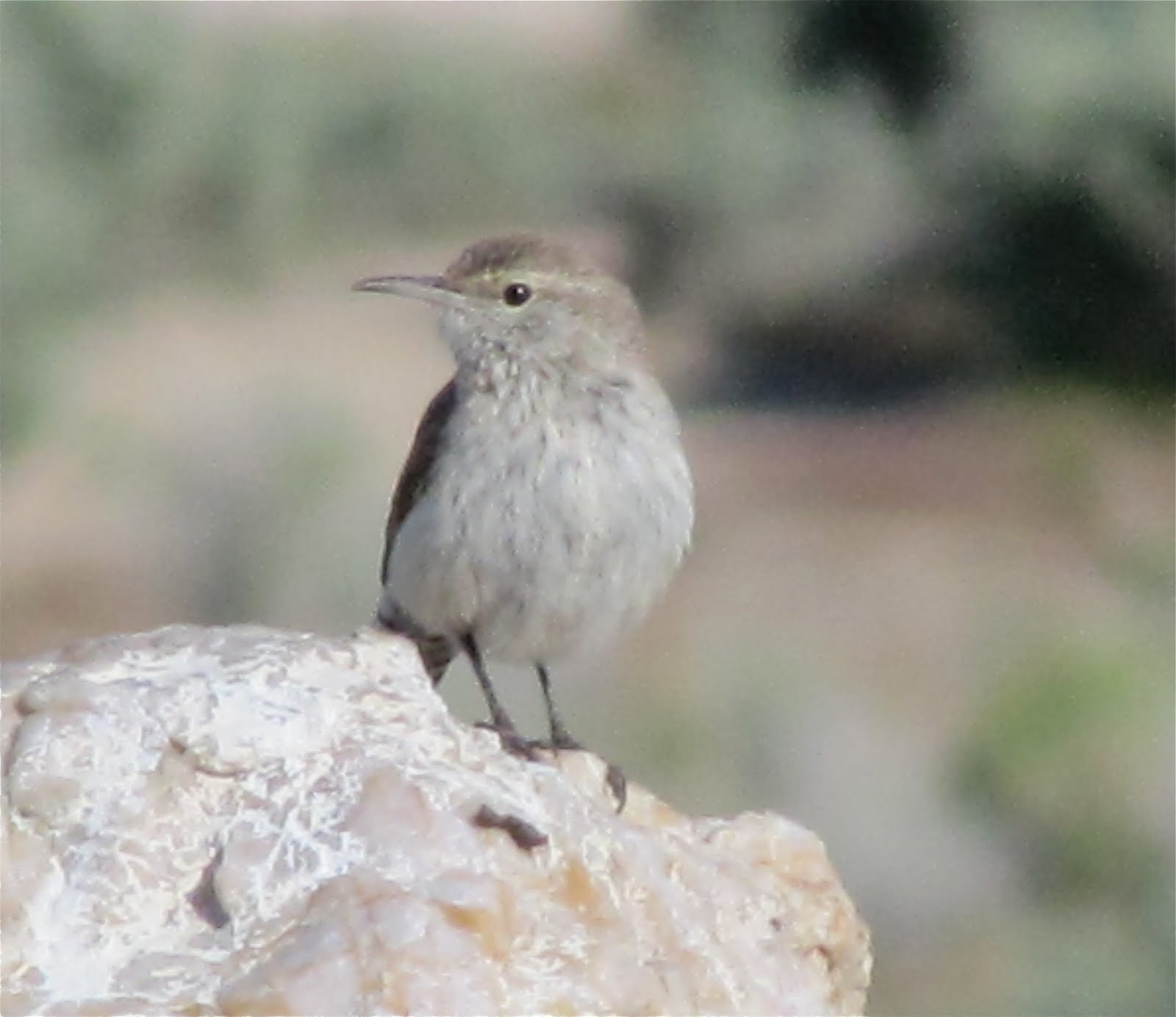
Scientific Name: Salpinctes obsoletus
Population Estimate: 4.2M, Least Concern status
Range / Habitat: Year-round in the southwestern US and into Mexico in rocky areas. Extends in summer further up in the western US. Their breeding habitat is dry rocky locations from southwestern Canada down to Costa Rica.
Field Notes: Pale grey bird of rocky areas with typical wren appearance: tail often upright, slightly down-curved bill, pale white eyebrow. Streaking to throat, which is less pronounced in juveniles.
Personal Notes: Did I mention that iBird audio can get a wren's attention? Even when not trying to….
Subscribe to:
Posts (Atom)