Showing posts with label woodpeckers. Show all posts

03 February, 2014

Ladder-backed Woodpecker

Scientific Name: Picoides scalaris

Range / Habitat: Year-round in arid, desert areas of southwestern US and northern Mexico where it forages and nests in cacti.

Field Notes: Small black and white woodpecker with barring complete across its back and spotting on chest. Males with red crown. Downy Woodpecker with smaller bill length relative to head, white stripe down back and clear underparts.

Personal Notes: Seen in Joshua Tree National Park.

31 December, 2013

Acorn Woodpecker

Scientific Name: Melanerpes formicivorus

Population Estimate: Unknown, but Least Concern status

Range / Habitat: Year round in oak and mixed oak-conifer forests on slopes and mountains in the western US down into Mexico and Central America.

Field Notes: Unmistakable in range. As Cornell's All About Birds puts it: "Reminiscent of a troupe of wide-eyed clowns."

Personal Notes: Frequently seen in Ramsey Canyon Preserve, Hereford AZ. Later we found a large group at West Fork SP near Sedona. They were all calling softly to one another as they settled down in several large trees for the night.

30 December, 2013

Gila Woodpecker

Scientific Name: Melanerpes uropygialis

Population Estimate: Unknown, but Least Concern status

Range / Habitat: Year-round in southern Arizona, the Baja Peninsula, and western Mexico. Favors arid habitats with large cacti or scattered trees,

Field Notes: Medium-sized woodpecker, all brown head and chest, wings barred black and white. Male with red spot on forehead.

Personal Notes: Seen at Sonora Desert Museum outside Tucson AZ.


17 October, 2012

Great Spotted Woodpecker

Scientific Name: Dendrocopos Major

Population Estimate: 73.5 - 216B

Range / Habitat: Resident in temperate forest throughout Europe and northern Asia.

Field Notes: Medium-sized black and white woodpecker with a black line which zigzags from the shoulder halfway across the breast, then back to the nape; a black stripe, extending from the bill, runs below the eye to meet this latter part of the zigzag line. Large white shoulder patch, barred flight feathers. Undertail coverts red. Males have a crimson spot on the nape, which is absent in females and juvenile birds. Syrian Woodpecker similar but less well-developed zigzag stripe on the neck. White-winged Woodpecker also similar but with far more extensive white wing patch.

Personal Notes: A welcome sound and sight after nearly a year in New Zealand without woodpeckers.

11 June, 2011

American Three-toed Woodpecker

Scientific Name: Picoides dorsalis

Population Estimate: 800K

Range / Habitat: Year-round in boreal and montane coniferous forests across all of North America

Field Notes: Medium-sized black-and-white woodpecker, more black than white. Head black with a white mustache stripe and a thin white line behind eye. Yellow cap in male. Throat, breast, belly and midline of back white. Black barring on flanks. Black-backed Woodpecker with all black back. Hairy Woodpecker with more white on face, no barring on flanks, red cap in male.

Personal Notes: Seen in the Laramie Mountains (Medicine Bow National Forest).

23 May, 2011

Black-cheeked Woodpecker

Scientific Name: Melanerpes pucherani


Population Estimate: 50-500K


Range / Habitat: Subtropical / tropical lowland moist forest in southern Mexico, Central America, and northwestern South America.


Field Notes: Medium-sized woodpecker with red nape in both male and female, black cheek and white postocular spot. Yellow tuft at base of bill. Black and white ladder pattern on back. Light grey horizontal stripes on belly. Similar to Golden-naped Woodpecker but no range overlap.


Personal Notes: Seen at Arenal Nayara Hotel, Costa Rica

Hoffmann's Woodpecker


Scientific Name: Melanerpes hoffmannii

Population Estimate: Unknown, but Least Concern status

Range / Habitat: Subtropical / tropical dry forest in a wide range of altitudes (up to 2100m) in Costa Rica, Nicaragua, Honduras.

Field Notes: Medium-sized woodpecker with yellow nape in both male and female, plain white face, neck and belly. Yellow tuft at base of bill. Males with red crown. Similar to Red-crowned Woodpecker, but nape and belly help distinguish.

Personal Notes: Seen en route from Monteverde to Cararas National Park, Costa Rica

Red-crowned Woodpecker

Scientific Name: Melanerpes rubricapillus


Population Estimate: Unknown, but Least Concern status


Range / Habitat: Lowland dry forest in Costa Rica, Panama, Colombia, Venezuela, and Trinidad and Tobago


Field Notes: Medium-sized woodpecker with plain white face, neck and chest. Black and white ladder back. Males with distinctive red crown and nape. Females with subtle red nape only. Red belly patch in both sexes, which is often difficult to see. Hoffmann's Woodpecker has yellow nape in both sexes.


Personal Notes: Seen at Manuel Antonio, Costa Rica

Olivaceous Piculet

Scientific Name: Picumnus olivaceus


Population Estimate: Unknown, but Least Concern status


Range / Habitat: Subtropical / tropical lowland and montane moist forest in Central American and northwestern South America.


Field Notes: Very small (4”) woodpecker with olive back, black speckled head, and black tail with white central rectrices.


Personal Notes: Seen at Manuel Antonio, Costa Rica

20 December, 2010

Lineated Woodpecker

Scientific Name: Dryocopus lineatus

Population Estimate: 5M to 50M

Range / Habitat: Year-round on both slopes of Mexico, through Central America and into northern Argentina in South America. It prefers lowland moist shrubland but is found in a variety of wooded habitats.

Field Notes: Large woodpecker with bright red crested head, plain black back, white stripe contiguous from bill down neck and sides. Belly is barred black and white. Larger Pale-billed Woodpecker lacks white stripe extending to the face, instead it forms a complete "V" in the back.

16 May, 2010

Red-naped Sapsucker


Scientific Name: Sphyrapicus nuchalis

Population Estimate: 2.2M

Range / Habitat: Moves throughout the lower elevations of mixed forest in western mountains of North America. Summer up to western Canadian Rockies, winter down to mountain regions in southern Mexico.

Field Notes: Woodpecker stance, but known to be sapsucker by white stripe down length of body. Very similar appearance to Yellow-bellied Sapsucker (red cap and throat, yellow belly), but little overlap in distribution. Per Sibley, Red-naped Sapsucker with two distinct columns of barring on the back, as in the top photos.

Personal Notes: Wonderful patience on Richard's part to get these photos. As so frequently happens, this bird was found in the wilds of a campground parking lot.

18 January, 2010

Golden-cheeked Woodpecker

Scientific Name: Melanerpes chrysogenys
Population Estimate: 50K to 500K
Location of Sighting: Puerto Vallarta, Mexico
Date of Sighting: January, 2010
Notes: Medium-sized woodpecker endemic to Western Mexico. Like many other woodpecker species, the male has a red tuft on his head (top photo) whereas the female does not (bottom photo). You can see the golden cheek in the female as well.

31 December, 2009

Golden-olive Woodpecker


Scientific Name: Colaptes rubiginosus
 
Population Estimate:500K to5M

Range / Habitat: Latin America : Mexico to Guyana, Northwest Peru and Northwest Argentina.

Field Notes: Adults are mainly golden olive above with some barring on the tail. The forecrown is grey, and the hindcrown red. The face is yellow-white and the underparts are barred black and yellowish. The bill is black. Adult males have a red moustachial strip which is lacking in the female.

Personal Notes:

24 December, 2009

Golden-fronted Woodpecker

Scientific Name: Melanerpes aurifrons

Population Estimate: 1.7M

Range / Habitat: Year-round in lowland dry shrubland from Texas through Mexico and into Central America.

Field Notes: Medium-sized woodpecker with black and white barred back and large, stout bill. This species has complex geographic variation in crown and nape, ranging from yellow to red, contiguous to discrete. Gila Woodpecker rarely overlaps, but has plain nape, no nasal tufts. Golden-cheeked Woodpecker with large, black eye ring. Yucatan Woodpecker quite similar but noticeably smaller bill and yellow nasal tufts.

Personal Notes: Seen in Belize and again in Cancun, Mexico.

22 December, 2009

Yucatan Woodpecker


Scientific Name: Melanerpes pygmaeus

Range / Habitat: Endemic to the Yucatan Peninsula, where found on forest edges, costal scrub, second growth.

Field Notes: Medium-sized woodpecker with small bill, white face and chest, black and white barred back and wings. Red crown which may extend to nape (females with red nape only). Yellow nasal tufts and red belly. Golden-fronted Woodpecker has much larger bill and can have red nasal tufts and yellow belly, in addition to the red varieties.

Personal Notes: Also known as Red-vented Woodpecker.

14 November, 2009

Great Spotted Woodpecker


Scientific Name: Dendrocopos major

Population Estimate: 75M - 200M

Range / Habitat:In Ireland, this woodpecker has been recorded in Tollymore Forest Park. While the Irish Wildlife Trust had argued in the past for the reintroduction of this woodpecker, the birds themselves began to recolonize Ireland of their own accord since about 2007

Field Notes: The upperparts are glossy black, with white on the sides of the face and neck. A black line zigzags from the shoulder halfway across the breast (in some subspecies nearly meeting in the center), then back to the nape; a black stripe, extending from the bill, runs below the eye to meet this latter part of the zigzag line. On the shoulder is a large white patch and the flight feathers are barred with black and white. The three outer tail feathers are barred; these show when the short stiff tail is outspread, acting as a support in climbing. The underparts are dull white, the abdomen and undertail coverts crimson. The bill is slate black and the legs greenish grey.

Personal Notes:

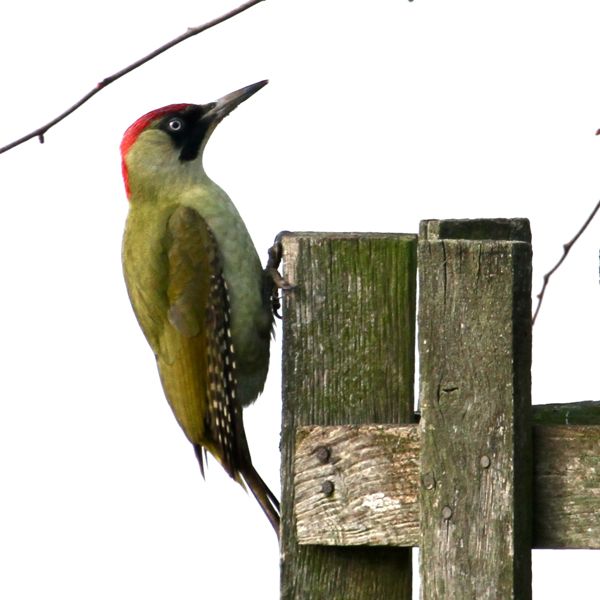
Eurasian Green Woodpecker


Scientific Name: Picus viridis

Population Estimate: 2M - 5M

Range / Habitat: Eurasian Green Woodpecker is essentially resident in its range, from W Europe and North Africa, to W Asia.

Field Notes: Adult male has green plumage. Upperparts are bright yellow-green. Rump is bright yellow. Uppertail coverts are yellow with green bases. Uppertail feathers are blackish with green edges. Central pair shows some pale bars. Long, pointed bill is dark grey to blackish, with paler base of lower mandible. Eyes are white with pinkish-white eye-ring. Short legs and zygodactylous feet are greenish-grey.

Personal Notes:

10 November, 2009

Pileated Woodpecker


Scientific Name: Dryocopus pileatus

Population Estimate: 930K, Least Concern status

Range and Habitat: Year-round in old forests of eastern US, southern Canada, and the west coast of the US. 

Field Notes: Large, black and white woodpeckers with a prominent head with red crest. White line down the sides of the throat. They show white on the wings in flight. Adult males have a red line from the bill to the throat, in adult females these are black.

Personal Notes: A majestic bird.

15 October, 2009

Yellow-bellied Sapsucker


Scientific Name: Sphyrapicus varius

Population Estimate: 9M

Range / Habitat: Their breeding habitat is forested areas across Canada, eastern Alaska and the northeastern United States. They prefer young, mainly deciduous forest.

Field Notes: The Yellow-bellied Sapsucker is a mid-sized woodpecker, Adults are black on the back and wings with white bars; they have a black head with white lines down the side and a red forehead and crown, a yellow breast and upper belly, a white lower belly and rump and a black tail with a white central bar. Adult males have a red throat; females have a white throat.
Personal Notes:

13 October, 2009

Red-bellied Woodpecker


Scientific Name: Melanerpes carolinus

Population Estimate: 10M, Least Concern status

Range / Habitat: Year-round throughout eastern US forests. They will venture out to feeders, however.

Field Notes: Medium-sized, sleek woodpecker with zebra-striped back and red mohawk. Red belly patch difficult to see. In females the red crown stripe does not include the forehead. Unmistakable in range. 

Personal Notes: We've started "seeing" these birds a lot more, once we learned the woodpecker songs and calls.