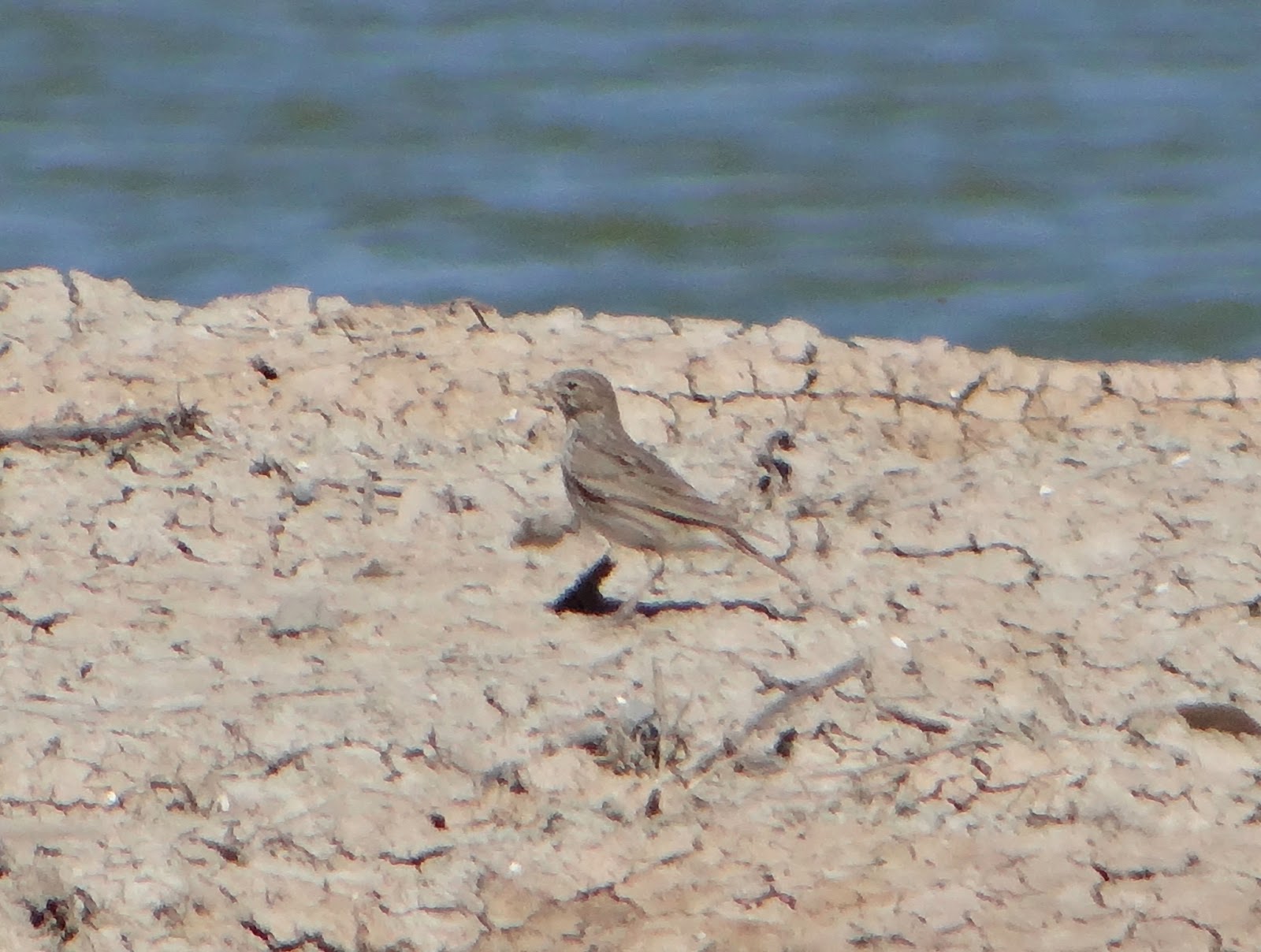
23 March, 2013

Common Wood Pigeon

Scientific Name: Columba palumbus

Population Estimate: 27M - 51M

Range / Habitat: Wooded areas in southern and western Europe, extending to eastern Europe and western Asia in summer.

Field Notes: Large pigeon, generally grey-purple, with conspicuous white neck spots, white eye-ring, and white shoulders in flight.

Personal Notes: A common sight around Alhambra in Granada, Spain and then again at Kew Gardens in London.


20 March, 2013

Montagu's Harrier

Scientific Name: Circus pygargus

Population Estimate: Unknown, but Least Concern status

Range / Habitat: Found throughout Europe, except Norway where it is not present. The breeding range extends as far east as the Urals. Breeding also occurs in northern Africa, mostly in Morocco.

Field Notes: Adult males are characterized by their overall pale grey plumage contrasting with black wingtips. Compared with other harriers this species has characteristic black bands along the secondaries, both above and below the wing and rusty streaks on belly and flanks. It has a particularly graceful flight, with powerful and elegant wingbeats which give an impression of buoyancy and ease.

Personal Notes: Seen at Donana National Park, Spain.

Crested Lark

Scientific Name: Galerida cristata

Population Estimate: Unknown, but Least Concern status

Range / Habitat: Non-migratory bird that breeds in open areas across most of temperate Eurasia from Portugal to northeast China and eastern India, and in Africa south to Niger.

Field Notes: Smallish lark, slightly larger and plumper than Skylark. It has a long spiky erectile crest. It is greyer than Skylark, and lacks the white wing and tail edges of that species.

Personal Notes: Seen at Donana National Park, Spain

Black-winged Stilt

Scientific Name: Himantopus himantopus

Population Estimate: Unknown, but Least Concern status.

Range / Habitat: Western Europe and Mediterranean region to Central Asia, sub-Saharan Africa and Madagascar, South and Southeast Asia.

Field Notes: Wader with long pink leg and a long thin black bill. Blackish above and white below, with a white head and neck with a varying amount of black.

Personal Notes: Seen at Donana National Park, Spain. Per HBW, Black-neck Stilt subsumed under this species name. 

Northern Lapwing

Scientific Name: Vanellus vanellus

Population Estimate: 4.2M - 10M

Range / Habitat: Breeds through temperate Eurasia on cultivated land. It is highly migratory over most of its extensive range, wintering further south as far as north Africa, northern India, Pakistan, and parts of China. 

Field Notes: Unmistakable in range. Typical lapwing habitus, iridescent blue and grey above, white below, black head plume

Personal Notes: Seen at Donana National Park, Spain. This is THE BEST PICTURE EVER!

Western Yellow Wagtail

Scientific Name: Motacilla flava

Population Estimate: Unknown, but Least Concern status.

Range / Habitat: Breeds in much of temperate Europe and Asia. Resident in the milder parts of its range, such as western Europe, but northern and eastern populations migrate to Africa and south Asia.

Field Notes: Breeding adult male is olive above and yellow below, with facial markings that vary by subspecies. Characteristic long, constantly wagging tail.

Personal Notes: Seen at Donana National Park, Spain.

Red-crested Pochard

Scientific Name: Netta rufina

Population Estimate: Unknown, but Least Concern status

Range / Habitat: Breeds in lowland marshes and lakes in southern Europe and Central Asia, wintering in the Indian Subcontinent and Africa.

Field Notes: Adult male is unmistakeable: rounded orange head, red bill and black breast. Flanks are white, the back brown, and the tail black. The female is mainly a pale brown, with a darker back and crown and a whitish face.

Personal Notes: Seen first at Donana National Park, Spain and later in Kew Royal Botanical Gardens, London.

Red-legged Partridge

Scientific Name: Alectoris rufa

Population Estimate: 6M - 13.5M

Range / Habitat: Breeds on farmland and open stony areas in southwestern Europe, in France and Iberia. It has been introduced in parts of England and Wales.

Field Notes: Sandy-brown above, pinkish-buff on the belly, and pale grey on the breast, with a prominent gorget of black streaking, bold rufous and black flank-bars, a cream throat, pink legs, and a red bill and eye ring.

Personal Notes: Seen near Donana National Park, Spain.

Booted Eagle

Scientific Name: Hieraaetus pennatus

Population Estimate: Estimated in the tens of thousands, Least Concern status.

Range / Habitat: Bird of wooded countryside with some open areas. Breeds in southern Europe, North Africa and across Asia. Winters in Sub-Saharan Africa and South Asia.

Field Notes: Medium-sized raptor with two relatively distinct plumage forms. Pale birds are mainly light grey with a darker head and flight feathers. The other form has mid-brown plumage with dark grey flight feathers. Distinctive white markings on the wings and shoulders. Feathers cover the legs.

Personal Notes: Nice digiscoping photo by Richard in Donana National Park, Spain. Along with the Little Eagle this bird is one of the closest living relatives of the extinct Haast's Eagle of New Zealand.

Corn Bunting

Scientific Name: Emberiza calandra

Population Estimate: 32M - 132M

Range / Habitat: Bird of open country that breeds across southern and central Europe, north Africa and Asia across to Kazahkstan. It is mainly resident, but some birds from colder regions of central Europe and Asia migrate southwards in winter.

Field Notes: Bulky bunting streaked grey-brown above, and streaked white breast, necklace with dark "pendant," and characteristic call.

Personal Notes: Seen around Donana National Park, Spain.

Subalpine Warbler

Scientific Name: Sylvia cantillans

Population Estimate: 4.5M - 12.8M

Range / Habitat: Migratory bird that breeds in the southernmost areas of Europe and northwest Africa. Winters along the southern edge of the Sahara.

Field Notes: Adult male with grey back and head, brick-red underparts, and white malar streaks. Female is mainly brown above, with a greyer head, and whitish below with a pink flush.

Personal Notes: Seen in Donana National Park, Spain

19 March, 2013

Kentish Plover

Scientific Name: Charadrius alexandrinus

Population Estimate: Unknown, but Least Concern status

Range / Habitat: Breeds on sandy coasts and brackish inland lakes, and is uncommon on fresh water. Breeds widely across southern Europe and Asia. Winters in Africa and southeast Asia.

Field Notes: Smaller, paler, longer-legged and thinner-billed than Ringed Plover or Semipalmated Plover. Its breast band is never complete, and usually just appears as dark lateral patches on the sides of the breast. Upperparts are greyish brown and the underparts white in all plumages. The breast markings are black in summer adults, otherwise brown. Breeding males of some races have a black forehead bar and a black mask through the eye. The legs are black.

Personal Notes: Seen at Donana National Park, Spain. Some sources consider this conspecific with Snowy Plover.

Little Ringed Plover

Scientific Name: Charadrius dubius

Population Estimate: 280K - 530K

Range / Habitat: Migratory birds who breed on open gravel areas near freshwater throughout Europe and western Asia. They winter in Africa and southeast Asia.

Field Notes: Small plover with grey-brown back and wings, a white belly, and a white breast with one black neckband. They have a brown cap, a white forehead, a black mask around the eyes with white above and a short dark bill. In contrast to the larger Ringed Plover, Little Ringed Plover has flesh-colored legs and a distinct yellow eye-ring.

Personal Notes: Seen at Donana National Park, Spain.

Sardinian Warbler

Scientific Name: Sylvia melanocephala

Population Estimate: 12.6M - 48.6M

Range / Habitat: Generally non-migratory Mediterranean warbler, extending through the southernmost areas of Europe and just into Asia in Turkey.

Field Notes: Adult male has a grey back, whitish underparts, black head, white throat and red eyes (top photo). Female is mainly brown above and buff below, with a grey head (bottom photo).

 Personal Notes: A nice spot toward the end of our birding trip in Donana National Park, Spain.

Curlew Sandpiper

Scientific Name: Calidris ferruginea

Population Estimate: 1.8M - 1.9M

Range / Habitat: Breeds in the tundra of Siberia. Migrates to Africa, Australasia or India.

Field Notes: Medium-sized waders, breeding adult has patterned dark grey upperparts and brick-red underparts. Winter bird bird is pale grey above and white below, and shows an obvious white supercilium. Legs brown-grey. Similar to Dunlin but with longer down-curved bill, longer neck and legs and a white rump.

Personal Notes: Seen at Donana National Park, Spain.


Slender-billed Gull

Scientific Name: Chroicocephalus genei

Population Estimate: Unknown, but Least Concern status

Range / Habitat: Breeding range around the Mediterranean and the north of the western Indian Ocean on islands and coastal lagoons. Wintering further south to north Africa and India.

Field Notes: Medium-sized non-hooded gull with light grey mantle. Neck and bill with slender, elegant appearance. Legs and bill are dark red, appearing black. summer, the breast has a pink colouration.

Personal Notes:

18 March, 2013

Black Redstart

Scientific Name: Phoenicurus ochruros

Population Estimate: 24.5M - 106M

Range / Habitat: Widespread in south and central Europe and Asia and northwest Africa, from Great Britain and Ireland south to Morocco, east to central China. Originally favored stoney ground, now can be found in similar urban habitats.

Field Notes: Adult male is overall dark grey to black on the upperparts and with a black breast. The lower rump and tail are orange-red. The belly and undertail are either blackish-grey or orange-red. There is a white wing panel. The female is grey to grey-brown overall except for the orange-red lower rump and tail, and white wing panel.

Personal Notes: Female restart shown above.


Lesser Short-toed Lark

Scientific Name: Calandrella rufescens

Population Estimate: Unknown, but Least Concern status

Range / Habitat: Prefers dry, baren soils in Spain, north Africa, and Turkey eastwards across the semi-deserts of central Asia to Mongolia and China.

Field Notes: Small pale lark, smaller even than Greater Short-toed Lark. It is dark-streaked greyish-brown above, and white below. It has a pale supercilium, and a short stubby bill. This species also lacks the dark neck patches of Greater Short-toed Lark, and has fine streaking across the breast.

Personal Notes: Seen in Donana National Park, Spain.

Spotless Starling

Scientific Name: Sturnus unicolor

Population Estimate: 8.5M - 18.6M

Range / Habitat: Nonmigratory bird, found in most open habitats.  Confined to the Iberian Peninsula, northwest Africa, southernmost France, and on the islands of Sicily, Sardinia and Corsica.

Field Notes: Similar in appearance and behavior to Common Starling, but with oily-looking black plumage, entirely spotless in spring and summer. It also differs in having conspicuously longer throat feathers

Personal Notes: 

16 March, 2013

Black Kite

Scientific Name: Milvus migrans

Population Estimate: 6M

Range / Habitat: Widely found throughout Europe, Asia, Africa and Australia

Field Notes: Dark plumage and forked tail in flight.

Personal Notes: Common sight above Donana National Park in Spain.

Common Chiffchaff

Scientific Name: Phylloscopus collybita

Population Estimate: Unknown, but Least Concern status

Range / Habitat: Migratory bird which breeds in open woodlands throughout northern and temperate Europe and Asia. Winters in southern and western Europe, southern Asia and north Africa.

Field Notes: Small, nondescript warbler. Olive-grey above, buff below, faint eyestripe. Named for its chiff-chaff song.

Personal Notes: A common little bird, but tough to photograph.

14 March, 2013

Eurasian Blackcap

Scientific Name: Sylvia atricapilla

Population Estimate: 80M - 196M

Range / Habitat: Breeds throughout temperate Europe, western Asia and northwestern Africa. Winters from northwestern Europe south to tropical Africa

Field Notes: Distinct grey warbler with black cap in the male and brown cap in the female.

Personal Notes: An "artistic" photo.

European Robin

Scientific Name: Erithacus rubecula

Population Estimate: Unknown, but Least Concern status

Range / Habitat: Partial migrant found throughout Europe and much of Asia.

Field Notes: Typical robin habitus with grey back, white underparts, and red chin and breast.

Personal Notes: Seen at Maria Lucia Park, Seville.

Rose-ringed Parakeet

Scientific Name: Psittacula krameri

Population Estimate: Unknown, but Least Concern status

Range / Habitat: Originally limited to equatorial Africa and India, this bird has feral populations scattered throughout the world.

Field Notes: All green parakeet, males with a rose-colored ring around its neck and slight blue hue to its head.

Personal Notes: A surprising sight in Maria Lucia Park, Seville.

Short-toed Treecreeper

Scientific Name: Certhia brachydactyla

Population Estimate: 2.7M - 11.7M

Range / Habitat: Low-lying deciduous forest in Western and Central Europe, extending into Northern Africa.

Field Notes: Common treecreeper habits and habitus. Only treecreeper in the Iberian Peninsula, but does overlap to the north with the Eurasian Treecreeper, which is found at higher altitudes and more coniferous forest.

Personal Notes: Seen at Maria Lucia Park, Seville

17 February, 2013

Blue Duck

Scientific Name: Hymenolaimus malacorhynchos

Population Estimate: 1200 birds

Range / Habitat: Year-round in rapid-flowing rivers and streams in relatively predator-free areas of both North and South Islands.

Field Notes: Unmistakable in range. Blue-grey dabbling duck on rapidly flowing waterways. Black head, flesh-colored bill with black tip, and rust-speckled breast.

Personal Notes: Maori name Whio. Part of an amazing weekend where we saw this rare bird and also the Okarito Kiwi (Rowi) in the wild.

16 December, 2012

Kea

Scientific Name: Nestor Notabilis

Population Estimate: 5000

Range / Habitat: Endemic to New Zealand's South Island, kea are found from Nelson to Fiordland and in Marlborough.

Field Notes: These birds are predominantly olive-green in colour, with darker edges. The lower back and tail are reddish, whilst the underwings are orange with yellow markings. The dark, recurved upper bill is significantly larger in males than females

Personal Notes: A welcome sight at the top of Avalanche Peak. It also marked our 100th bird blog entry of 2012!

27 October, 2012

Goldcrest

Scientific Name: Regulus regulus

Population Estimate: Unknown, but Least Concern status

Range / Habitat: Partial migrant, favoring wooded habitats throughout Europe and discontinuously in Asia through to Japan.

Field Notes: Small, flitty, olive-drab bird with pin beak. Darker wings with two white wing bars. Pale area around eyes. Golden crest that is often difficult to see.

Personal Notes: Seen at Kew Royal Botanical Gardens, London.

Carrion Crow

Scientific Name: Corvus Corone

Population Estimate:
21M to 71M

Range / Habitat:
Occurs throughout Great Britain, south of the Great Glen in northern Scotland. There are two main carrion crow populations globally; one is distributed throughout most of Asia, the second occurs in western Europe.

Field Notes:
It is the same size and shape as the hooded crow, but differs in that the plumage is entirely black, with a green and bluish-purplish gloss. The thick black bill has a curved tip.

Personal Notes:
Some species consider this conspecific with Hooded Crow.

Hooded Crow

Scientific Name: Corvus Cornix

Population Estimate:
Unknown, but Least Concern status

Range / Habitat:
In Britain, this crow mainly occurs in north and western Scotland, it also occurs in Ireland and on the Isle of Man. Elsewhere it is widespread throughout central and northern Europe between the Arctic in the north to the Mediterranean in the south.

Field Notes:
The Hooded Crow (Corvus cornix) (sometimes called Hoodiecrow) is a Eurasian bird species in the crow genus. It is an ashy grey bird with black head, throat, wings, tail and thigh feathers, as well as a black bill, eyes and feet. Like other corvids it is an omnivorous and opportunistic forager and feeder.

Personal Notes:
Some authors consider this bird conspecific with Carrion Crow.

18 October, 2012

Western Jackdaw

Scientific Name: Coloeus Monedula

Population Estimate: 21.1 - 90B

Range / Habitat: Widely distributed throughout Britain, but scarcer in upland areas. The jackdaw is also widespread throughout western Europe. Scandinavian populations migrate to England, Scotland and the Low Countries for the winter.

Field Notes: Medium-sized crow with grey nape and pale yellow eye. Hooded Crow with black eye, all black hood and more grey on back.

Personal Notes: Richard captured the top photo on the Cechy Most across the Vltava River in Prague.

Eurasian Magpie

Scientific Name: Pica Pica

Population Estimate: 22.5 - 57B (including Black-Billed Magpie in the US)

Range / Habitat: Resident in open areas, including artificial habitats, throughout most of Europe, Asia, and northwest Africa.

Field Notes: Large, conspicuous pied corvid with brilliant sheen to the back and long tail. Unmistakable in range.

Personal Notes: 


17 October, 2012

Great Spotted Woodpecker

Scientific Name: Dendrocopos Major

Population Estimate: 73.5 - 216B

Range / Habitat: Resident in temperate forest throughout Europe and northern Asia.

Field Notes: Medium-sized black and white woodpecker with a black line which zigzags from the shoulder halfway across the breast, then back to the nape; a black stripe, extending from the bill, runs below the eye to meet this latter part of the zigzag line. Large white shoulder patch, barred flight feathers. Undertail coverts red. Males have a crimson spot on the nape, which is absent in females and juvenile birds. Syrian Woodpecker similar but less well-developed zigzag stripe on the neck. White-winged Woodpecker also similar but with far more extensive white wing patch.

Personal Notes: A welcome sound and sight after nearly a year in New Zealand without woodpeckers.

Great Tit

Scientific Name: Parus major

Population Estimate: 300M - 1.1B

Range / Habitat: Resident in wooded areas throughout Europe, the Middle East, Central and Northern Asia, and parts of North Africa.

Field Notes: Hefty tit, with a black head and neck, prominent white cheeks, olive upperparts and yellow underparts.

Personal Notes: Some authors consider this to be a subspecies.

Eurasian Blue Tit

Scientific Name: Cyanistes caeruleus

Population Estimate: 20 - 44M pairs estimated in Europe

Range / Habitat: Temperate forest or scrubland in continental Europe, the Mediterranean, and in parts of the Middle East and North Africa.

Field Notes: Small, brightly colored songbird with yellow breast, blue cap and wings. Thin black eye stripe.

Personal Notes: Some sources consider this to be a subspecies.

16 September, 2012

Dunnock

Scientific Name: Prunella modularis

Population Estimate: >30M in Europe alone

Range / Habitat: Temperate areas throughout Europe and Asia with some migratory behavior. Found in woodland, scrub, and gardens. Introduced to New Zealand.

Field Notes: Small, solitary, ground-foraging passerine. Brown and black streaked back, grey head, fine black bill. Can be mistaken for House Sparrow, but no grey or rufous to head and no black bib.

Personal Notes: Hard bugger to get a photo of, for as common as they are. Also known as Hedge Accentor.

Morepork

Scientific Name: Ninox novaeseelandiae

Population Estimate: Unknown, but Least Concern status

Range / Habitat: Forested areas throughout both islands of New Zealand and Tasmania.

Field Notes: Dark brown owl, spotted and barred buff. Yellow eyes set in dark facial mask. Call a loud double hoot - "more-pork". Little Owl is a locally common European introduction in the South Island of New Zealand but is smaller, lighter and has a shorter tail.

Personal Notes: Maori name Ruru. Some sources consider this to be Southern Boobook. We were so excited to get a daytime sighting of this bird at Karori Wildlife Sanctuary.

13 July, 2012

White-throated Treecreeper

Scientific Name: Cormobates leucophaea

Population Estimate: Unknown, but Least Concern status

Range / Habitat: Endemic to Australia, where found in forested areas in the eastern part of the country.

Field Notes: Medium-sized grey treecreeper with white throat. Dark flanks with white spots. No eye brown stripe.

Personal Notes: Photographed at Honeyeater Park in Chiltern, Australia.

Brown Treecreeper

Scientific Name: Climacteris picumnus

Population Estimate: Unknown, but Least Concern status

Range / Habitat: Endemic to Australia where found in forested areas throughout the eastern part of the country.

Field Notes: Medium-sized passerine, typical tree creeping behavior. Overall brown with grey cap and white eye brown. Breast is heavily streaked, under tail coverts with horizontal bars.

Personal Notes: Not a shy bird, photographed at Honeyeater Park in Chiltern, Australia.

Pied Butcherbird

Scientific Name: Cracticus nigrogularis

Population Estimate: Unknown, but Least Concern status

Range / Habitat: Endemic to Australia where found in forest, scrubland and savannah throughout most of the country, excluding Tasmania.

Field Notes: Medium-sized black and white passerine with upright posture. White collar extends completely around the back of the neck. Bill blue with black tip. Grey Butcherbird has grey wings, not black and collar does not extend entirely around neck. Australian Magpie much more gregarious and common, with forward posture, and large white patch on back on neck, not collar.

Personal Notes: Richard had a few sightings of this bird, but we found it harder to photograph.

12 July, 2012

Whistling Kite

Scientific Name: Haliastur sphenurus

Population Estimate: Unknown, but Least Concern status

Range / Habitat: Found in open or lightly wooded areas, often near water, throughout most of Australia, Papua New Guinea, and parts of Indonesia.

Field Notes: Medium-sized raptor, generally brown. Light tail prominent. Distinctive underwing pattern with white streaming back from the wrists noted in above bird after alighting.

Personal Notes: Spotted among a group of cormorants in Chiltern, Australia.

Eastern Yellow Robin

Scientific Name: Eopsaltria australis

Population Estimate: Unknown, but Least Concern status

Range / Habitat: Endemic to Australia where found in forested areas in the eastern part of the country.

Field Notes: Inquisitive, small passerine with round, grey head, grey body and yellow breast.

Personal Notes: Always a welcome site in the national parks in southeastern Australia.

Southern Emu-wren

Scientific Name: Stipiturus malachurus

Population Estimate: Unknown, but Least Concern status

Range / Habitat: Endemic to Australia where found in scrubland in the south of the country, including Tasmania.

Field Notes: Small wren, generally brown with more rufous cap and blue throat. Distinctive, long and fan-like tail, nearly always cocked upright.

Personal Notes: Amazing photograph by Richard as we spent the better part of our hike in Ben Boyd National Park trying to capture these guys.

Grey Shrikethrush

Scientific Name: Colluricincla harmonica

Population Estimate: Unknown, but Least Concern status

Range / Habitat: Forest and savannah throughout Australia and Papua New Guinea.

Field Notes: Medium-sized thrush with grey head and tail, brown back, and white underparts. White between eyes and bill. Typical thrush-like behavior. Strikingly melodic voice.

Personal Notes: A surprisingly difficult identification for us, especially given how common this bird easy, but we finally figured it out 10 days into our two week tour of southeastern Australia.

White-bellied Sea Eagle

Scientific Name: Haliaeetus leucogaster

Population Estimate: 670 to 6700 individuals

Range / Habitat: Costal areas from India and Sri Lanka through southeast Asia to Australia

Field Notes: Large bird of prey with white head, breast, and tail. Wings grey. Distinctive profile from underneath with black trailing edge contrasting with the white, as above. Unmistakable in range.

Personal Notes: Seen both perching and soaring during a glorious hike in Ben Boyd National Park, Australia.

Wedge-tailed Eagle

Scientific Name: Aquila audax

Population Estimate: Unknown, but Least Concern status

Range / Habitat: Grassland, scrubland, savannah throughout Australia, Indonesia, and Papua New Guinea.

Field Notes: Large, dark raptor with characteristic wedge-shaped tail, prominent in flight. Golden mantle on back.

Personal Notes: Seen at Ben Boyd National Park in Australia.

Yellow-tufted Honeyeater

Scientific Name: Lichenostomus melanops

Population Estimate: Unknown, but Least Concern status

Range / Habitat: Medium-sized yellow-olive passerine, darker upper parts and lighter underneath, with typical honeyeater bill. Black mask, yellow throat with narrow dusky chin, small yellow ear tuft. Unmistakable in range.

Field Notes: Endemic to Australia where found in sclerophyll forest and woodland in southeastern part of the country.

Personal Notes: A very dramatic bird, which you can partially see here. Photographed at Bartley's paddock in Chiltern, Australia.